Products





AI Platform


Asana Foundations
Company Type
No articles found for this topic.
No articles found for this topic.

Visit our pricing page for more information.
What’s on your calendar for today? This week? This month? Calendar view helps teams schedule tasks, identify conflicts, and stay on track with deadlines through an intuitive drag-and-drop interface.
If you can't see the calendar tab, then click the + button next to the last tab and select Calendar.
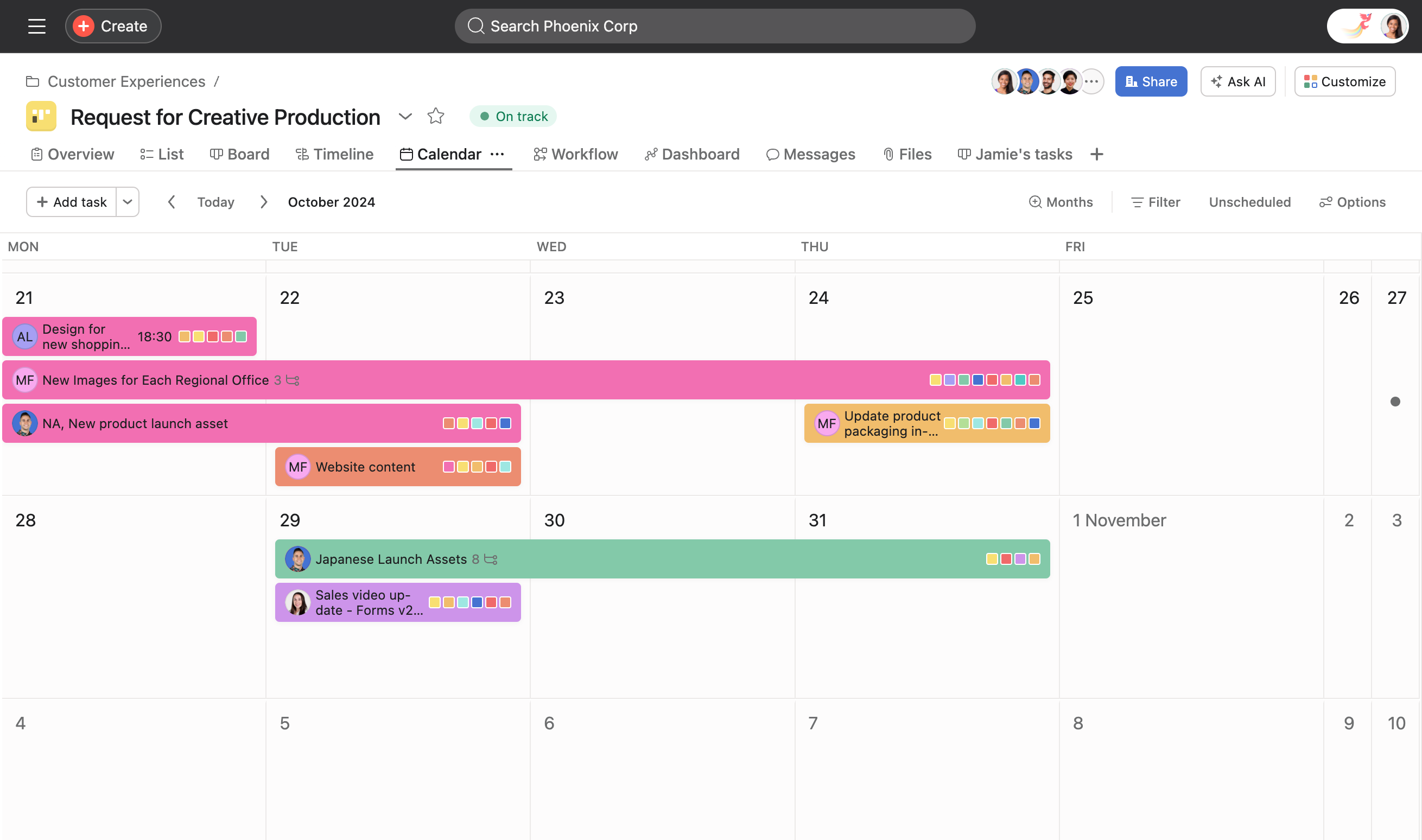
There are a few different calendar views in Asana. You can see your personal task list and projects on a calendar. Next time a teammate asks if you have the bandwidth, double check your calendar in My Tasks. Calendar is also visible in our mobile app, so you can quickly review or reschedule work when you’re away from your desk.
Note
For planning projects on a deadline, try timeline instead. It will help you manage dependencies, have a solid schedule before you start, and keep your team on track as work changes.
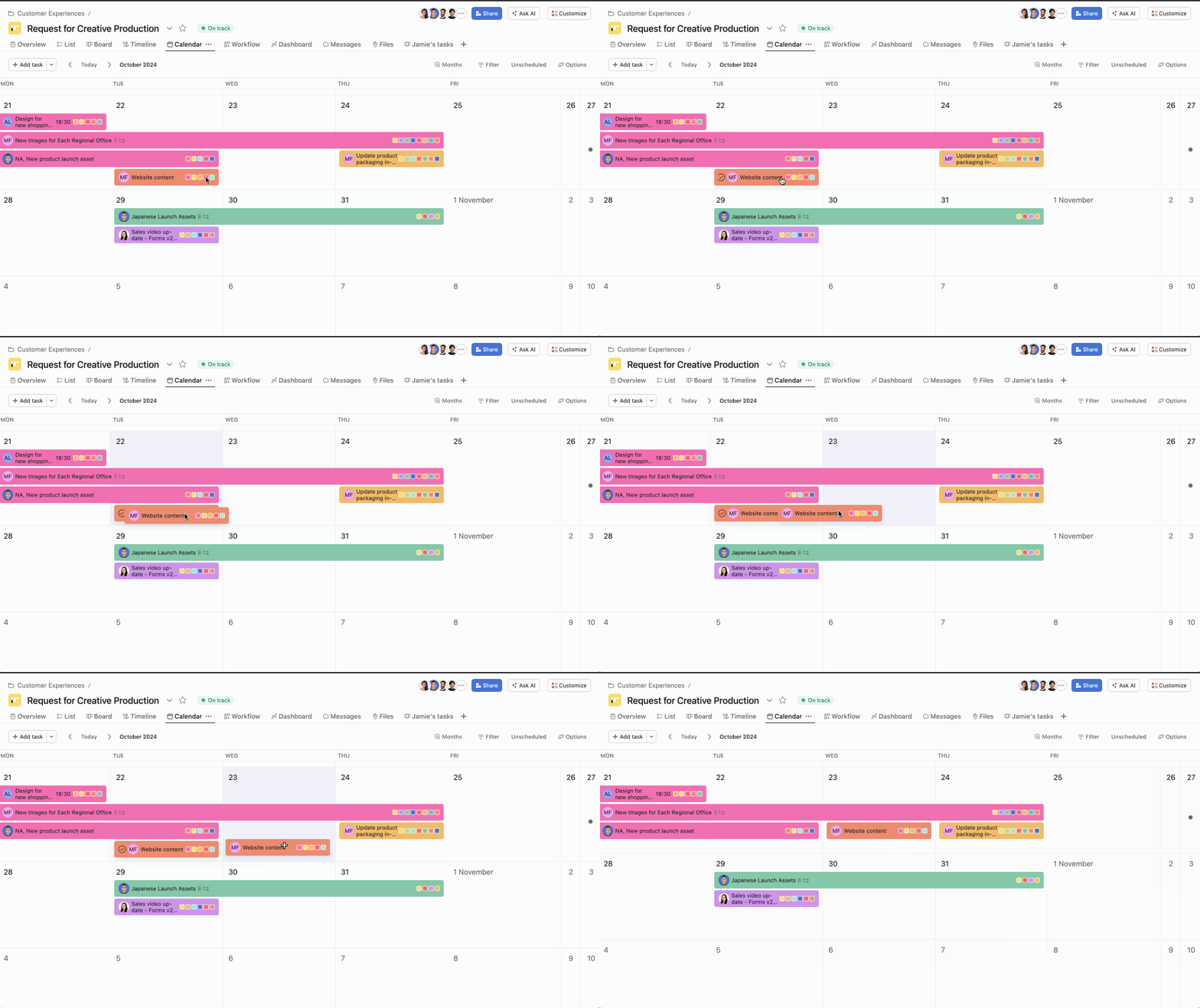
You can easily reschedule tasks by clicking and holding a task, then dragging it to a new date. When you drop the task on a new date, Asana automatically updates the due date in the task details.
This visual approach makes it easy to spot scheduling conflicts and balance your team's workload across different time periods.
Calendar view offers multiple viewing options to match your planning needs:
Tasks appear in different colors based on their custom field values, making it easy to distinguish between different types of work at a glance.
Timeline and calendar view give you different insights and should be used for different purposes. They’re both project views, so you can always toggle between them, but here’s what to consider:
| Consider | View timeline if... | View calendar if… |
|---|---|---|
| Deadline | Your project has an end date | Your project is ongoing |
| Workflow | Your project has dependencies and work happens in a certain order | Tasks are more independent of each other |
| Schedule | You want to create a project’s schedule and see progress towards it | You want to get a glimpse of work happening this week or month |
| Audience | You want to share the plan with executives, other teams, stakeholders on the project | You’re looking at your own schedule in My tasks, or your team’s overall schedule |
Like what you see? Get started with a free Asana trial today. Try for free

