Produkter


AI Platform
Vi kunde inte hitta några artiklar om det här ämnet.
I den här artikeln

Gå till vår prissättningssida för mer information.
För att lyckas med att införa Asana i hela teamet krävs mer än att bara lära sig funktionerna – det handlar om att ändra hur människor engagerar sig i, organiserar och kommunicerar om arbetet. Den här artikeln ger ett strukturerat tillvägagångssätt för att hjälpa ditt team att anpassa sig till Asana på ett effektivt sätt och uppnå varaktig framgång.
Baserat på erfarenheter från hundratals kundimplementeringar följer framgångsrika team en strukturerad strategi i sex steg:
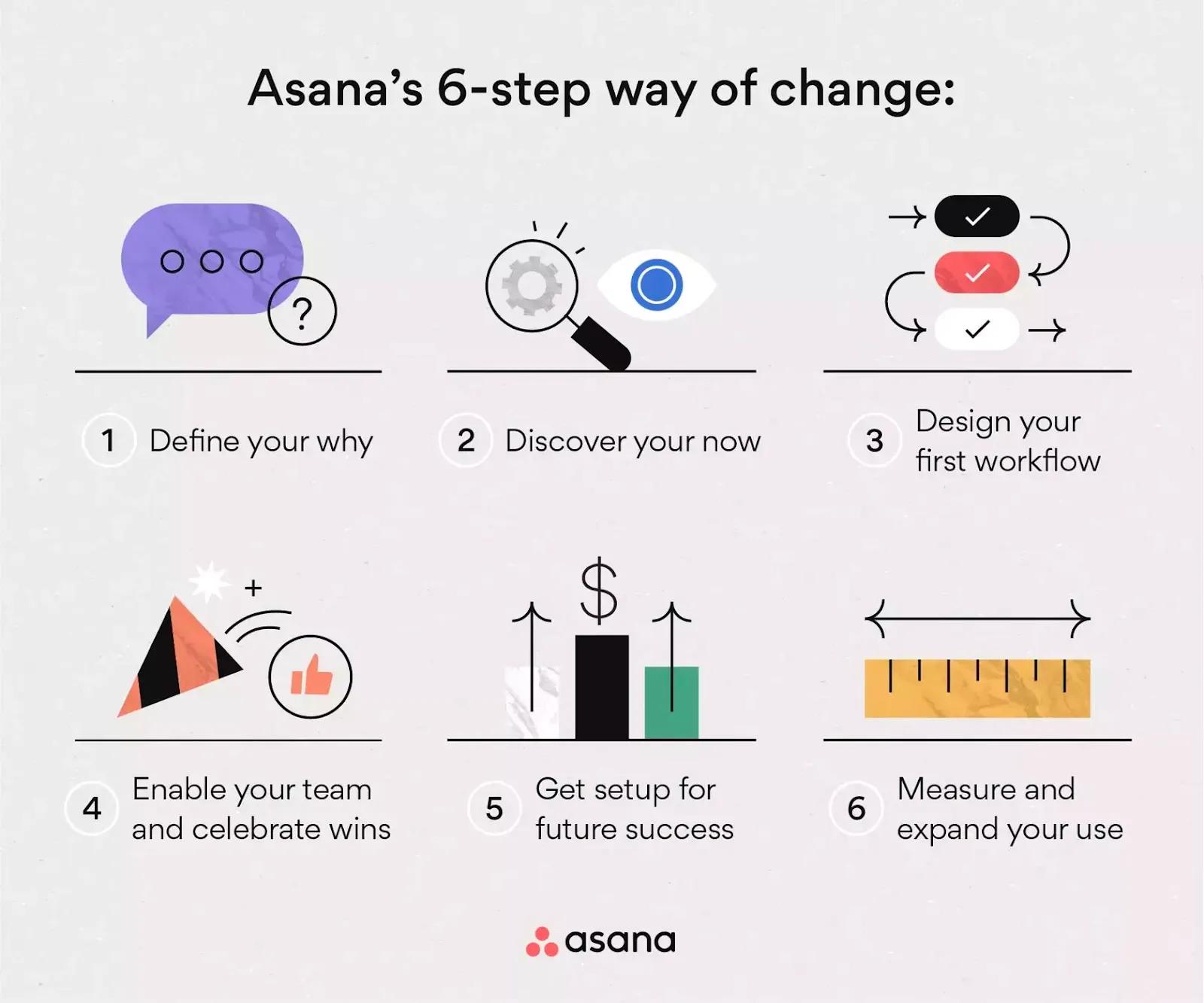
Innan du introducerar dina team behöver du ett tydligt och övertygande svar på den här frågan: Vilka problem kommer implementeringen av Asana att lösa och hur? Du måste också föreställa dig hur framgång ser ut och fundera på vad som kommer att vara möjligt i framtiden genom att använda Asana som inte är möjligt nu.
Samla ditt förändringsnätverk
Framgångsrika implementeringar kräver hjälp av människor som är lika engagerade i Asana som du. Identifiera en grupp personer som kan stödja lanseringen. Ditt förändringsnätverk bör omfatta personer som är motiverade att säkerställa framgång, har en mångsidig representation från viktiga team, känner till sina teams processer och kan påverka förändring. Sikta på mellan 3 och 10 personer och var strategisk.
Utvärdera teamets befintliga processer för arbetshantering, verktyg och problemområden. Genom att förstå din utgångspunkt kan du skräddarsy Asana-implementeringen efter dina specifika behov.
Börja med ett arbetsflöde med stor inverkan i stället för att försöka migrera allt på en gång. Välj en process som involverar flera teammedlemmar och har tydliga resultat. Att skapa ett arbetsflöde hjälper till att sätta standarden för hur människor arbetar i Asana. När du överväger ditt första arbetsflöde måste det ha vissa egenskaper:
Att skapa en kommunikations- och utbildningsplan är ett utmärkt sätt att undvika vanliga fallgropar vid teknikinförande.
Att fastställa konventioner är viktigt för att förhindra att Asana blir ohanterligt. Några vanliga normer är:
Ett av de största hindren för personer som börjar använda Asana är att tilldela arbete till någon annan. Ge det ett namn och normalisera det. Uppgifter kan vara förfrågningar, idéer osv. Det är bra om chefer kommer igång med detta och ber sina närmaste medarbetare att tilldela dem uppgifter.
Namnge uppgifter med hjälp av handlingsord och beskriva vad den tilldelade personen behöver göra med hjälp av dessa handlingsord.
Gemensamma överenskommelser om slutdatum kommer att säkerställa att inget arbete glöms bort. Den som tilldelar uppgiften ska alltid ställa in ett slutdatum och ange i uppgiftsbeskrivningen om slutdatumet är flexibelt. Håll slutdatum uppdaterade. Om ett slutdatum kommer att missas ska du notera det i kommentarerna och uppdatera uppgiften. Det hjälper till att förhindra att människor faller tillbaka i sina gamla vanor.
Gör Asana till en innehållsrik och relevant plats för kommunikation och etablera det som en central referenskälla. Fastställ förväntningar kring hur ofta personer förväntas kontrollera Asana. Uppmuntra bekräftelse och kommunikation om att aviseringar har setts.
Spåra förlopp i förhållande till de första framgångsvärdena och utöka gradvis användningen av Asana till ytterligare arbetsflöden och teammedlemmar.
Några vanliga sätt att mäta framgång:
Anteckning
This article has been AI-translated.
Send translation feedback.



