In diesem Artikel finden Sie praktische Anleitungen, wie Sie Ihre Asana-Konten effektiv trennen können.
Benutzer sollten ihre Asana-Konten trennen, wenn sie die beiden folgenden Kriterien erfüllen:
Céline ist eine Angestellte von ACME und hat ein Asana-Konto mit den folgenden E-Mail-Adressen:
Dieser Nutzer hat Zugriff auf 2 Domains:
Celine muss ihre E-Mail-Adresse celine@gmail.com vom ACME-Asana-Konto trennen, um den Zugriff auf ihren persönlichen Arbeitsbereich zu behalten. Das Ergebnis sind zwei separate Asana-Konten.
Um Ihre Konten zu trennen, führen Sie bitte die folgenden Schritte aus:
Navigieren Sie im entsprechenden Arbeitsbereich zu den Einstellungen und dort zum Tab Benachrichtigungen. Legen Sie die E-Mail-Adresse des Kontos, das Sie trennen möchten, im Abschnitt E-Mail-Benachrichtigungen als bevorzugte E-Mail-Adresse fest.
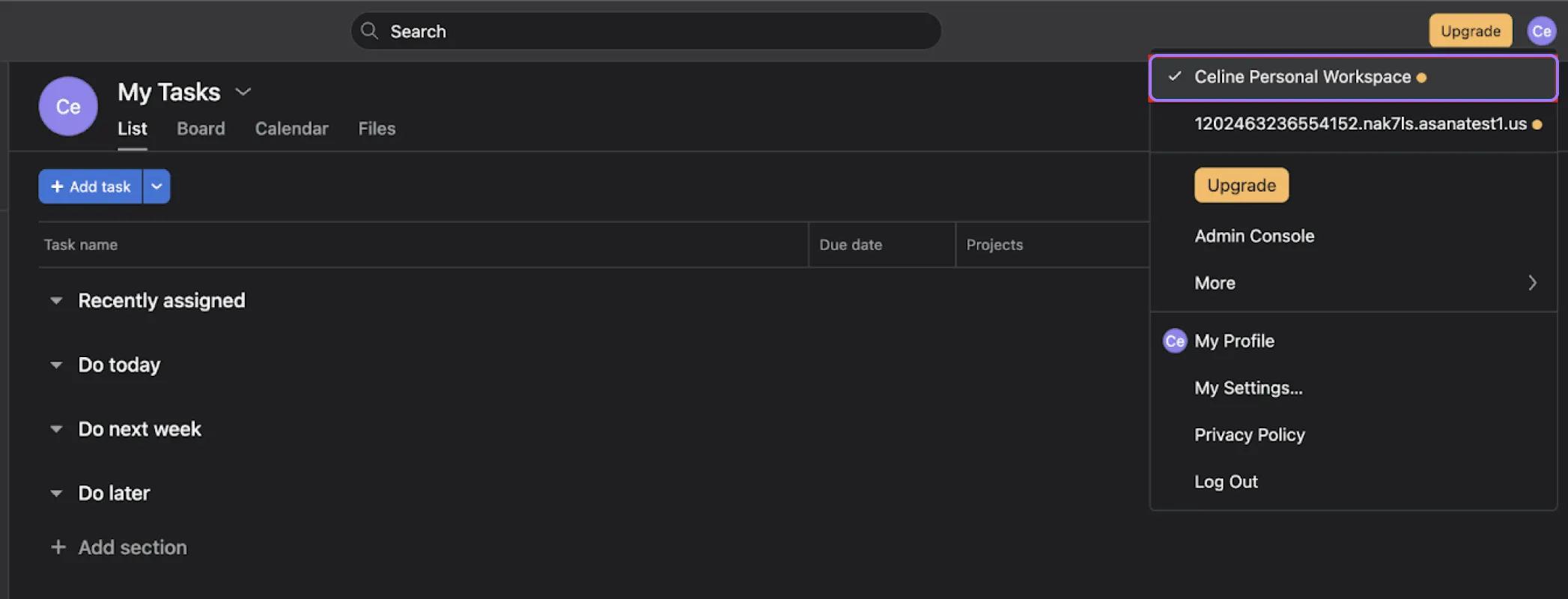
Navigieren Sie zu dem Arbeitsbereich, den Sie in das neue Konto aufteilen möchten
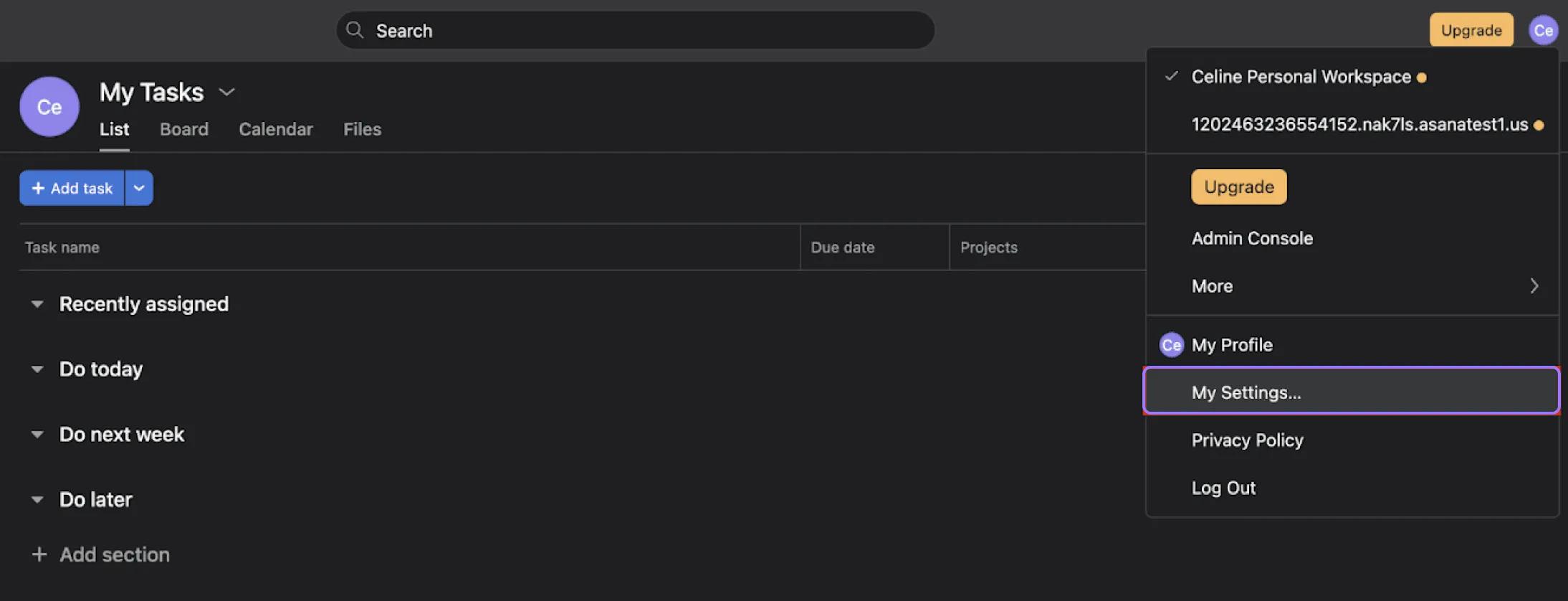
Navigieren Sie zu Meine Einstellungen
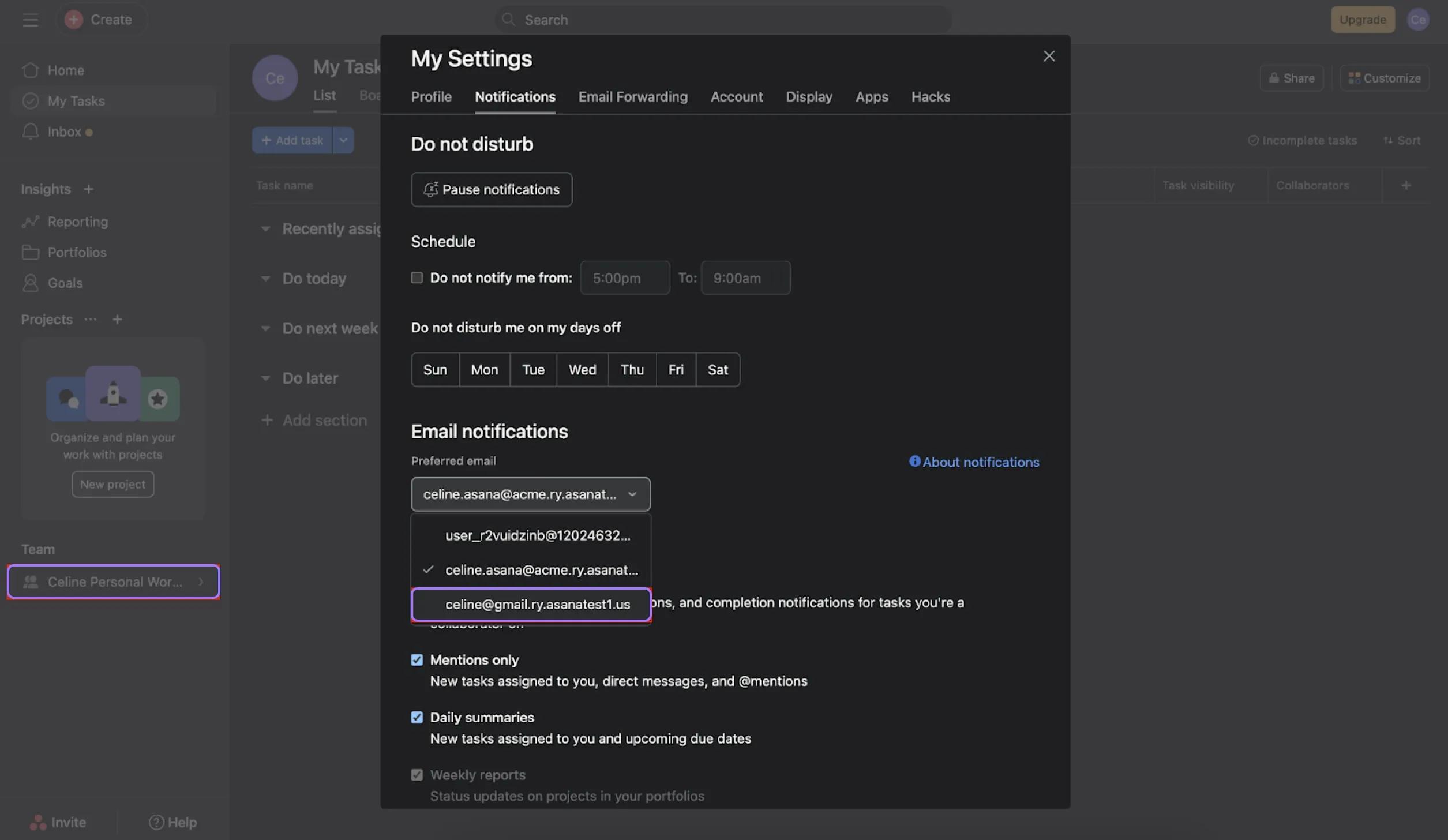
Bitte kontaktieren Sie unseren Support, um die Trennung Ihrer Asana-Konten abzuschließen.
Betroffene Nutzer werden per E-Mail und in Asana über den Zeitplan für die bevorstehenden Änderungen informiert.
Bitte lesen Sie den entsprechenden Artikel, um detaillierte Informationen zur Trennung von Asana-Konten aufgrund der Asana-E-Mail-Richtlinie zu erhalten.
Nach der Trennung der Konten sendet Asana eine E-Mail an die neu getrennten E-Mail-Adressen, in der die betroffenen Benutzer angewiesen werden, ein Passwort für das neue Konto/die neuen Konten festzulegen.
Hinweis
API- oder App-Verbindungen (Slack, Zendesk usw.) werden nicht übertragen. Diese müssen manuell zum neuen Konto hinzugefügt werden.
Hinweis
Dieser Artikel wurde mit KI übersetzt.
Feedback zur Übersetzung geben.

These cookies are strictly necessary to provide you with certain features. For example, these cookies allow you to access secure areas that require registration and set your privacy preferences. Because these cookies are essential to providing services to you, they cannot be disabled. You can set your browser to block or alert you about these cookies, but it may cause some parts of the site to not work.
Third party trackers collect information used for analytics and to personalize your experience with targeted ads. Under the Virginia Consumer Data Protection Act, you have the right to opt-out of the sale of your personal data to third parties. You also have the right to opt out of targeted advertising related processing. You may exercise your right to opt out of the sale of personal data and targeted advertising by using this toggle. If you opt out, we will not be able to offer you personalized ads and we will stop sharing your personal information with third parties. For more information please see our Privacy Statement.
These cookies allow us or our third-party analytics providers to collect information and statistics on use of our services by you and other visitors. This information helps us to improve our services and products for the benefit of you and others.
These cookies, provided by our third-party advertising partners, collect information about your browsing habits, as well as your preferences for various features and services. They also provide us with auditing, research, and reporting to know when advertising content has been displayed and how successful the content has been. This information allows us and our third-party advertising providers to display relevant advertising content.
These cookies provide enhanced functionality, providing chat support, allowing you to more easily complete forms, personalizing content to your preferences, and selecting your communications preferences. If you do not enable these cookies, or choose to disable them in the future, that could impact your ability to use certain features.