Im Folgenden finden Sie eine Liste mit häufig gestellten Fragen zur Rechnungsstellung.
Gemäß den Vertriebssteuervorschriften ist Asana gesetzlich verpflichtet, staatliche und lokale Steuern auf Abonnementgebühren für Kunden an bestimmten Standorten zu erheben. Ob die Steuern anfallen, wird durch den Sitz des Kunden bestimmt. Der tatsächliche Steuersatz richtet sich nach den jeweiligen staatlichen bzw. lokalen Steuersätzen und kann je nach Standort variieren.
Ab Februar 2019 wird die geltende staatliche und regionale Vertriebssteuer auf der Grundlage Ihrer Rechnungsadresse ermittelt und auf die anfallenden Gebühren erhoben.
Wenn Sie eine gemeinnützige oder schulische Einrichtung in den USA sind und über eine Steuerbefreiung verfügen, folgen Sie bitte den Schritten in diesem Artikel, um Ihre Unterlagen zur Steuerbefreiung einzureichen.
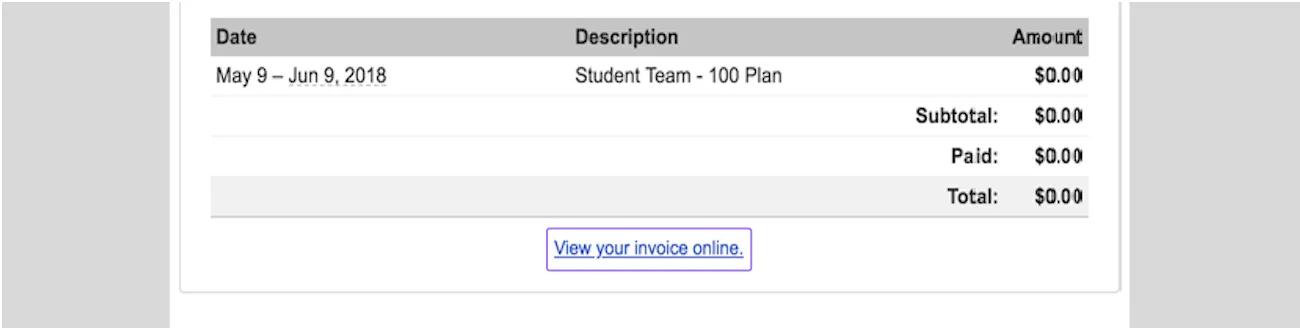
Die auf Ihre Abonnementgebühr anfallende Vertriebssteuer wird in einer separaten Zeile auf Ihrer Rechnung angegeben. Ihre Rechnung können Sie über Ihr Konto einsehen.
Rechnungsverantwortliche können ihre Rechnungen jederzeit über den Tab Rechnungsstellung in den Einstellungen ihres Arbeitsbereichs oder Unternehmens einsehen. Der Administrator eines kostenpflichtigen Unternehmens, der auch die rechnungsverantwortliche Person für sein Abonnement ist, kann über die Admin-Konsole auf die Rechnungsstellung zugreifen.
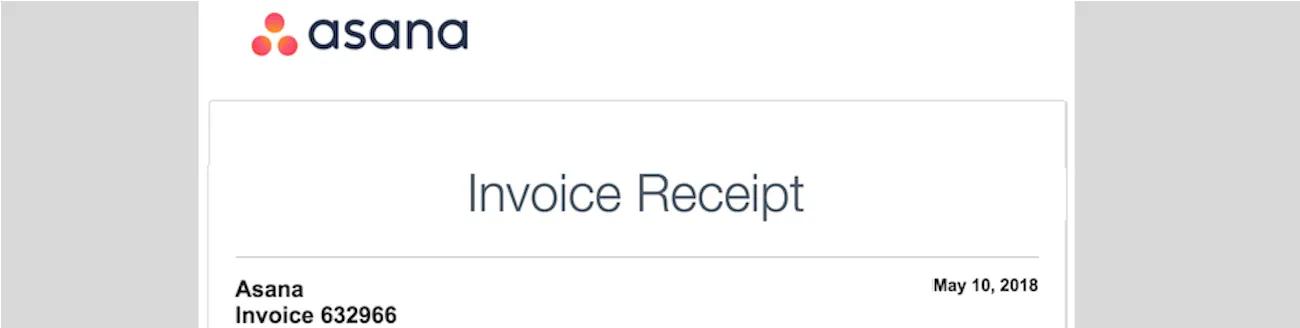
In jedem Abrechnungszeitraum erhält die rechnungsverantwortliche Person per E-Mail eine Kopie der Rechnung. Alle diese E-Mails enthalten am Ende der Nachricht einen Link, über den Sie auf Ihre letzten Rechnungen zugreifen können.
So greifen Sie auf all Ihre früheren Rechnungen zu:
Suchen Sie eine beliebige Rechnungs-E-Mail von Asana und öffnen Sie sie.
Klicken Sie am Ende der E-Mail auf Rechnung online ansehen.
Hinweis
Nur die rechnungsverantwortliche Person erhält Asana-Rechnungs-E-Mails und kann auf frühere Rechnungen zugreifen.
Hinweis
Dieser Artikel wurde mit KI übersetzt.
Feedback zur Übersetzung geben.

These cookies are strictly necessary to provide you with certain features. For example, these cookies allow you to access secure areas that require registration and set your privacy preferences. Because these cookies are essential to providing services to you, they cannot be disabled. You can set your browser to block or alert you about these cookies, but it may cause some parts of the site to not work.
Third party trackers collect information used for analytics and to personalize your experience with targeted ads. Under the Virginia Consumer Data Protection Act, you have the right to opt-out of the sale of your personal data to third parties. You also have the right to opt out of targeted advertising related processing. You may exercise your right to opt out of the sale of personal data and targeted advertising by using this toggle. If you opt out, we will not be able to offer you personalized ads and we will stop sharing your personal information with third parties. For more information please see our Privacy Statement.
These cookies allow us or our third-party analytics providers to collect information and statistics on use of our services by you and other visitors. This information helps us to improve our services and products for the benefit of you and others.
These cookies, provided by our third-party advertising partners, collect information about your browsing habits, as well as your preferences for various features and services. They also provide us with auditing, research, and reporting to know when advertising content has been displayed and how successful the content has been. This information allows us and our third-party advertising providers to display relevant advertising content.
These cookies provide enhanced functionality, providing chat support, allowing you to more easily complete forms, personalizing content to your preferences, and selecting your communications preferences. If you do not enable these cookies, or choose to disable them in the future, that could impact your ability to use certain features.